PET Sticker Flakes can add bright color and texture to craft kits, stationery, resin projects, and retail packaging. Yet a bulk order is harder to judge than a small sample. A handful may look vivid under a shop’s cool lights, while a full bag reveals uneven cuts or colors that differ from the product photos. Small details matter.
This guide introduces seven practical tips for buying PET Sticker Flakes in bulk. It focuses on checking sample quality, comparing flake size and color, reviewing surface finish, and confirming how the product is packed. Buyers should also look closely at minimum order quantities, lead times, and the supplier’s answers to specific questions. Clear product specifications make comparisons easier, though they cannot replace a physical sample.
Think about where the flakes will be used. A fine, consistent mix may suit shaker cards, while larger pieces could stand out in a clear resin design. Storage matters, too: resealable packaging can help keep flakes dry and reduce mess after opening. Ask for details rather than relying on attractive listing images. A supplier’s response is useful evidence, but one reply alone does not guarantee every batch will match.
There is no perfect order. Start with a realistic quantity, test the material in your intended project, and note what you would change next time. These tips can help buyers make a more informed decision, avoid preventable surprises, and choose PET Sticker Flakes that fit both their creative needs and budget.
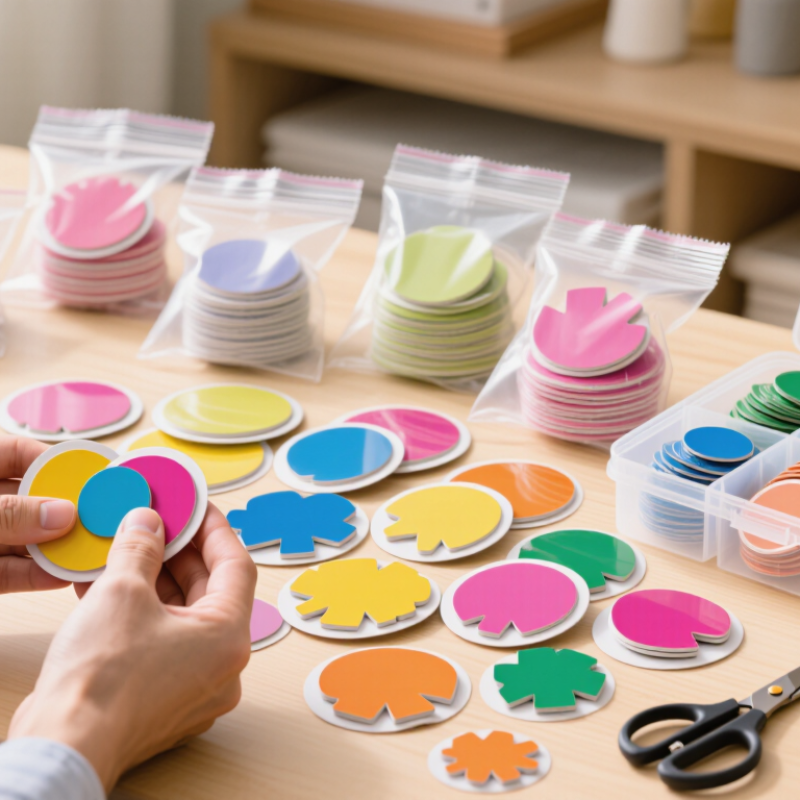
PET sticker flakes are individual, die-cut designs, usually supplied on small release-paper or film backings. Unlike stickers on a continuous roll, they are easy to sort, share, or add to stationery sets. The sticker face may use clear or printed PET film, while adhesive and surface coatings affect how it feels and performs. PET alone does not guarantee water resistance or strong adhesion. Check the product specifications for those details. Small details matter.
Bulk formats commonly include mixed-design bags, compartmented boxes, and individually packed sets. A bag can be economical for craft workshops, but loose flakes may bend or stick together during handling. Compartmented packaging keeps designs visible and easier to count. For resale, individually packed sets can look neater, though they add packaging and sorting costs. Counts can vary. Before ordering, request a sample and confirm the number of designs, piece count, flake dimensions, backing type, and finish. Compare the stated quantity with the packing method; weight-based counts may not mean every bag contains exactly the same number. There is no perfect format for every buyer. A sample can reveal wrinkles, hard-to-peel backings, or colors that look different under indoor lighting.
When buying PET sticker flakes in bulk, match the cut size to the surface and task. Tiny flakes fill narrow lettering and planner corners; larger pieces stand out on gift tags but can crowd small designs. Size matters. Ask for a sample, then test it on the actual paper, plastic, or coated card you plan to decorate. A jar sample may look consistent, while a bulk carton can reveal more variation.
Adhesive choice depends on the surface. Smooth glass and textured paper behave differently, so check whether flakes lift cleanly, curl, or leave residue after pressing. Test both. NAPCOR’s 2023 PET Recycling Report put the U.S. PET bottle recycling rate at 33%. That figure describes bottles, not sticker flakes, and does not guarantee that decorated items are recyclable. Adhesives, inks, and coatings can change how materials are handled. It is an easy distinction to miss.
Finish affects both appearance and handling. Gloss catches light under a shop lamp; matte surfaces can make fine colors easier to read. If flakes will be layered, compare clear and metallic finishes on the same background. Specify size range, adhesive behavior, and finish in writing before placing a large order. A small test can prevent a carton of beautiful flakes that simply will not stick.
Print quality is easiest to judge on a physical sample, not a bright screen. Check whether tiny lettering stays sharp and whether pale colors remain visible against the clear film. Ask for the same production method and finish planned for your order. A proof can reveal color shifts, but it cannot show every batch variation. I still find this easy to overlook.
Material claims need evidence. Request a material specification and safety documentation for the film, inks, and adhesive. If recycled content is advertised, ask what the percentage covers and how it is verified. NAPCOR’s 2023 PET Recycling Report puts the U.S. PET bottle recycling rate at 29.1%. That figure concerns bottles, not sticker flakes; it is a reminder to avoid treating “PET” as proof of recyclability.
Small detail. Big difference.
Durability should be tested under the conditions your customers will actually face. Rub a sample with a dry cloth, then a slightly damp one; check for ink transfer, curling, or adhesive residue. Test flakes on glass, paper, and coated surfaces, since adhesion can vary. Ask suppliers to document their test method and results, including sample size and conditioning time. A quick desk test is useful, but it is not a standardized performance report. Some uncertainty remains.
A low quote can hide expensive trade-offs. When comparing suppliers of PET sticker flakes, request the same specifications from each: flake size, thickness, finish, color range, and packaging. Otherwise, prices are difficult to compare fairly. Ask for a physical sample and check how the flakes look under ordinary desk lighting. Small details matter.
Review the full price, not just the per-kilogram figure. Shipping, sample fees, custom colors, and protective packaging can change the final cost. Ask whether the quote applies to a single order or a repeat purchase, and how long it remains valid. A supplier who explains these details clearly may be easier to work with than one offering a slightly lower price. That is not always obvious at first.
Minimum order quantities deserve equal attention. A large MOQ may reduce unit costs, but it can tie up cash and leave you with colors that sell slowly. Ask whether mixed colors count toward the minimum, and whether a smaller trial order is available. Compare production and dispatch estimates, too. I have seen neat spreadsheets miss one awkward detail: cartons may arrive in sizes that are hard to store. Check the packing dimensions before placing a bulk order, and keep written specifications with the quote.
Illustrative cost model for comparing order quantities—not supplier quotes or market-price data.
Example only: this model assumes a unit cost of $0.12 for 100 packs, $0.10 for 500 packs, and $0.09 for 1,000 packs. Ask suppliers to confirm material specifications, sample quality, pricing, MOQ, lead time, and shipping terms before comparing quotes.
When buying PET sticker flakes in bulk, request a production sample, not only a sales sample. Compare print sharpness, color, cut edges, and adhesive release across several designs. Try peeling flakes from both the top and middle of the pack; uneven backing or curled corners can be easy to miss. Check them under the lighting where customers will use them. A shade difference may appear only beside a white notebook page.
Ask for samples from more than one carton, then compare them with the approved reference. Record the lot number, film thickness, dimensions, and any visible defects. ISO 2859-1 offers attribute-sampling plans based on lot size and inspection level; it does not set one universal sample count. Agree on an inspection plan with the supplier before production. Small point, but important. Packaging matters too: sealed inner bags and sturdy cartons help limit dust, moisture, and crushed corners during transit. OECD’s Global Plastics Outlook reports that packaging represented 40% of global plastic waste in 2019. That figure is not specific to sticker flakes, but it reinforces the value of avoiding preventable rejects. I still find packaging checks are often rushed. Check carton labels against the purchase order, and keep a retained sample from each batch.
| Tip | What to Check | Practical Sample Check | Bulk-Order Requirement | What to Record |
|---|---|---|---|---|
| 1. Request a representative sample | Confirm that the sample uses the same PET film, adhesive, finish, and production method proposed for the bulk order. | Request samples from the intended design range. Check that the sample is identified by design or SKU and, where available, production lot. | Specify that bulk goods must match the approved sample and written product description. Treat samples as evaluation material, not as a guarantee of every production unit. | Sample date, design or SKU, material description, finish, and any differences disclosed by the supplier. |
| 2. Check dimensions and die cuts | Review the overall sheet or pack size, individual sticker sizes, cut alignment, and whether stickers release cleanly from the backing. | Measure several pieces across more than one sample sheet. Check for incomplete cuts, cut-through backing, rough edges, or noticeably off-center designs. | Agree on nominal dimensions and acceptable tolerances in writing; tolerances should reflect the product’s design and manufacturing method. | Measured dimensions, number of pieces checked, and examples of any cutting or alignment defects. |
| 3. Test adhesion and removal | Assess initial tack, placement, adhesion after application, and whether the sticker lifts or leaves residue on the intended surface. | Apply samples to clean surfaces representative of expected use. Check immediately and again after an agreed observation period. Test removability only if it is a stated product requirement. | Name the intended surface and any performance expectation in the order specification. Adhesion can vary with surface texture, cleanliness, temperature, and application. | Surface tested, application conditions, observation time, lifting or residue, and removal result if tested. |
| 4. Compare print and finish | Look for color shifts, blurred details, smudging, scratches, bubbles, or a finish that differs from the approved sample. | View samples under consistent lighting and compare matching designs side by side. Inspect both the printed face and the edges. | Approve a reference sample or proof and state which visible differences require review before shipment. Avoid relying on screen color alone. | Reference sample or proof, lighting conditions, observed color or finish differences, and any agreed approval limits. |
| 5. Verify count and assortment | Confirm the number of sheets or packs per unit, pieces per sheet if relevant, and the mix of designs in assorted sets. | Count a selection of sample packs and verify that the design mix matches the stated contents. Check whether duplicates or substitutions are permitted. | Define unit of sale, pack count, assortment breakdown, and the process for handling shortages or unapproved substitutions. | Declared and checked quantities, assortment list, and any count discrepancy. |
| 6. Inspect packaging for protection | Check that packaging protects the stickers from moisture, dust, bending, abrasion, and transit damage. | Review the inner packaging, seals, backing condition, and outer carton. Confirm that packs remain flat and identifiable after handling. | Agree on pack format, labeling information, carton packing method, and any protective materials needed for the shipping route. | Pack and carton condition, labels, protection used, and any damage observed during inspection. |
| 7. Check batch consistency before shipment | Compare production samples or finished goods across packs for consistent dimensions, cut quality, print, finish, and assortment. | Where feasible, inspect packs drawn from different cartons or positions in the shipment rather than checking only one pack. | Agree on a written inspection plan, defect definitions, and a process for reporting and resolving nonconforming goods before dispatch. | Inspection date, cartons and packs checked, issues found, photos, and the agreed disposition of any affected goods. |
Request a physical sample made with the planned printing method and finish. Check tiny lettering and pale colors under ordinary desk lighting. Screens can mislead.
Ask for specifications and safety documents covering the film, inks, and adhesive. If recycled content is claimed, ask what it includes and how it is verified. “PET” alone does not prove recyclability.
Rub a sample with a dry cloth, then a slightly damp one. Look for ink transfer, curled edges, or sticky residue. Test glass, paper, and coated surfaces.
Request matching details for flake size, thickness, finish, colors, and packaging. Compare shipping, sample fees, custom colors, and protective packing too. A low unit price can hide extra costs.
Ask whether mixed colors count toward the minimum and whether a trial order is available. A large order may lower unit costs, but slow-selling colors can tie up cash.
Compare several designs for sharp printing, color, cut edges, and adhesive release. Peel flakes from the top and middle of each pack. Small flaws hide.
Request samples from multiple cartons and compare them with the approved reference. Record lot numbers, dimensions, thickness, and visible defects. Keep a sample from each batch.
Sealed inner bags and sturdy cartons can help limit dust, moisture, and crushed corners. Check carton labels against the purchase order and note packing dimensions. I still rush this check sometimes.
Buying PET Sticker Flakes in bulk starts with understanding the available formats, such as different quantities, flake shapes, and packaging options. Consider how the flakes will be used, then match their size, adhesive strength, and finish to your project’s surface and appearance requirements. A practical choice should also offer clear, consistent printing and suitable material safety and durability for the intended application.
Before placing a large order, compare suppliers by pricing, minimum order quantities, and the details included in each offer. Request samples to check color, adhesion, finish, and overall quality in person. Review how the flakes are packaged and stored, and ask how the supplier maintains consistency between production batches. These steps can help you balance cost and quality, reduce surprises, and choose PET Sticker Flakes that meet your project’s needs.