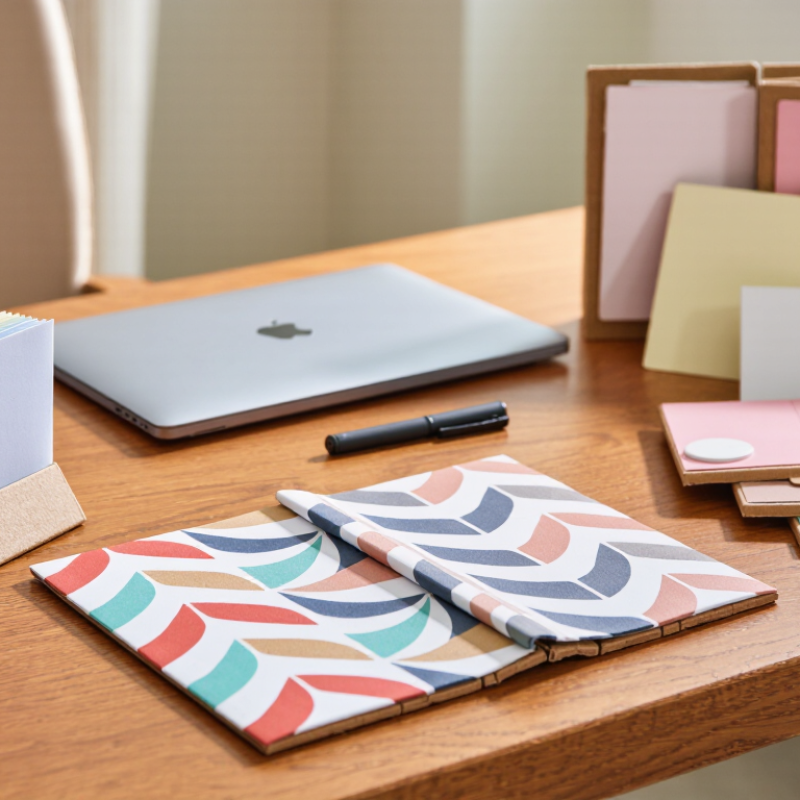
Choosing Decorative Memo Pads for your business involves more than selecting attractive colors. The right pad should support daily communication, brand recognition, and practical office use. A small pad beside a reception phone can capture visitor details quickly. A larger square pad may suit meeting notes, product sketches, or customer reminders. Consider paper thickness, writing comfort, adhesive quality, sheet size, and the durability of the backing board.
Your brand also deserves careful attention. Match the memo pad design with your logo, packaging, and workplace style. Soft pastel pages may suit a wellness studio, while bold geometric patterns could fit a creative agency. Ask suppliers for physical samples before placing a large order. Check whether ink feathers, pages detach cleanly, and printed colors remain consistent. These simple tests reveal problems that online images often hide. Reliable suppliers should explain production timelines, material sources, printing methods, and quality checks clearly.
Budget matters, but the cheapest option may create waste through weak glue or poor paper. A slightly stronger pad can leave a better impression with clients and employees. Sustainability claims also need evidence, not vague promises. Request relevant certifications or clear material information when environmental performance matters to your company. Decorative Memo Pads can become useful brand touchpoints, yet decoration should never reduce readability. I have found that attractive designs sometimes distract users from important notes. That lesson is easy to overlook. Review your audience, workplace habits, and ordering volume before deciding. A thoughtful choice balances appearance, function, and dependable supplier support.
Define Your Business Needs and Memo Pad Usage Scenarios
Choosing decorative memo pads starts with a practical question: how will your business use them? A reception desk needs compact pads for quick visitor notes. A training team may need larger pages for diagrams and action points. Sales staff often prefer slim pads that fit beside a laptop. The decoration should support that moment, not merely display a colorful design.
Usage frequency also matters. A daily planning pad needs durable paper, clear date areas, and easy page removal. Event handouts can use lighter paper and brighter graphics. ASI’s 2023 Ad Impressions Study reported that 85% of consumers remembered an advertiser after receiving a promotional product. That figure supports memo pads as useful brand reminders, but usefulness comes first. A pad that tears badly will not build trust.
Define the audience before choosing size, binding, and artwork. Ask where the pad will sit, who will touch it, and what users must record. Office teams may value ruling and pen-friendly paper. Creative teams may prefer blank pages. Measure desk space, too. Small details matter. A five-millimeter margin can affect writing comfort. Our own sampling experience suggests that decorative corners sometimes reduce usable space, an issue designers overlook. Recheck the final proof with real notes, not only digital previews. Some choices will still need revision. That is normal.
Compare Paper Quality, Size, Layout, and Decorative Features
How to Choose Decorative Memo Pads for Your Business?
Paper quality affects writing comfort, durability, and perceived value. Choose paper between 80 and 120 gsm for everyday notes. Thicker sheets resist ink bleeding, especially with gel pens. The 2023 Two Sides Trend Tracker reported that 82% of consumers enjoy reading printed content on paper. That preference supports tactile office products. Still, glossy paper can feel attractive but may cause smearing. Test several pens before ordering.
The 2023 Two Sides Trend Tracker reported that 82% of consumers enjoy reading printed content on paper.
Size should match the task. A compact A6 pad fits beside a keyboard, while A5 offers space for meeting notes. Use ISO 216 dimensions for consistent sizing and easier storage. Layout matters just as much. Wide ruling supports quick lists. Dotted grids suit diagrams and flexible planning. A clear top margin can also improve handwriting.
Decorative features should reinforce the business purpose. Soft colors, corner shapes, borders, and small illustrations add character without reducing writing space. My own mistake was choosing an unusual die-cut shape. It looked memorable, but users lost valuable note area.
Tips:
Request physical samples. Check page thickness, glue strength, color accuracy, and pen drying time. Compare printed and blank areas under office lighting. Recycled content can strengthen the product story; the U.S. EPA reported 67.4 million tons of paper and paperboard in municipal waste in its 2018 Facts and Figures report. However, recycled sheets may vary in smoothness. Specify a consistent finish, then inspect a production sample before approving the full run.
Match Memo Pad Designs with Your Brand Identity
How to Choose Decorative Memo Pads for Your Business?
Match Memo Pad Designs with Your Brand Identity
Decorative memo pads should feel like a small, usable extension of your brand. Start with your visual identity, not the decoration aisle. If your business uses calm colors, choose soft tones, clean lines, and restrained patterns. A playful company may prefer bright borders, illustrated corners, or unusual shapes. Keep it useful. Customers should still have enough writing space for phone numbers, reminders, and quick notes.
Match the pad’s paper texture with your brand’s personality. Smooth paper can suggest efficiency and modern service. Slightly textured paper may feel warmer and more crafted. Check the adhesive strip carefully. It should hold firmly without tearing paper or leaving heavy residue. Request a physical sample before ordering. Online images often hide weak glue, thin sheets, or colors that appear different under office lighting.
Practical selection also requires consistent details. Compare the pad with your envelopes, packaging, and reception materials. The design should support recognition without copying every visual element. Small details matter. A logo area that is too large can reduce writing space. A delicate pattern may disappear after printing. I have seen teams choose attractive samples that staff rarely use, which reveals an uncomfortable truth: visual appeal alone does not create value. Test the memo pad at a real desk, with a real pen, for several days. Then revise the design if it feels inconvenient.
How to Choose Decorative Memo Pads for Your Business?
Match memo pad designs with your brand identity by selecting a format that provides the right balance of writing space, visual impact, and practical use.
Paper-area reference: The chart compares common ISO paper formats using their standard dimensions. Larger formats provide more space for expressive layouts, while smaller formats support compact, everyday messaging.
Check Supplier Reliability, Samples, and Production Standards
How to Choose Decorative Memo Pads for Your Business?
A reliable supplier should provide clear business details, production timelines, and responsive communication. Ask how long they have produced stationery and which quality controls they use. Experienced suppliers usually explain paper weight, adhesive strength, printing methods, and packaging without vague promises. Request recent product photos and independent customer references when possible. A polished website alone proves very little.
Always order samples before approving a large quantity. Check whether pages tear cleanly and whether the adhesive holds after repeated handling. Place the pad near a sunny window for several days. Look for fading, curling, or color differences. Test the printing with a damp fingertip, too. I once trusted a bright sample, but the delivered paper felt thinner. That mistake taught me to compare the approved sample with the final production batch. Samples can still hide problems, so ask for a signed specification sheet.
Tips:
Ask for a pre-production sample, not only a catalog piece. Confirm paper thickness, pad size, page count, adhesive position, and color references in writing. Request a small pilot order when your budget allows. Review random units from the shipment, rather than checking only the top pad. Production standards should include inspection records, moisture protection, and secure carton packing. Suppliers may miss small defects sometimes. Your process should catch them early.
Conclusion
Choosing the right Decorative Memo Pads for your business starts with clearly defining how and where they will be used. Consider whether they are intended for office notes, customer messages, event giveaways, product packaging, or promotional campaigns. Then compare practical details such as paper thickness, writing smoothness, pad size, page layout, adhesive quality, and decorative elements. These features should support everyday usability while creating an attractive and memorable experience.
The design should also reflect your business identity through suitable colors, patterns, typography, and visual style. Before placing an order, review customization choices, pricing, production timelines, and minimum order quantities to ensure they match your budget and campaign goals. Finally, assess supplier reliability by requesting samples, checking quality-control procedures, confirming production standards, and reviewing communication and delivery capabilities. A careful evaluation helps ensure the finished memo pads are useful, consistent, and professionally presented.