
Buying Gold Foil Sticker Flakes across borders looks simple until a sample fails under ordinary handling. A bright surface can hide weak adhesion, uneven flakes, or poor color consistency. Ian Lancaster, a respected print-technology consultant, offers a useful warning: “The sample is the evidence; the specification is only the promise.” That principle should guide every purchase.
This guide introduces seven practical tips for global buyers. It examines supplier verification, flake size, foil brightness, adhesive compatibility, packaging conditions, order quantities, and shipping reliability. Ask for physical samples, not only polished photographs. Rub one sticker against coated paper. Press another onto glass, cardboard, and a textured notebook cover. Then check whether the flakes lift, cloud, or transfer. Small tests reveal expensive mistakes.
Material descriptions also need careful reading. “Gold” may describe a warm yellow finish, not genuine metallic content. Confirm the base film, adhesive type, thickness, color reference, and storage requirements. Request batch information and recent production photos when consistency matters. Reliable suppliers should explain their quality checks clearly. They should also provide safe, lawful shipping documentation for the destination market.
I admit one limitation. No checklist can replace local testing. Humidity, temperature, and surface coatings change results. A supplier may be excellent, yet unsuitable for your application. Compare at least two samples before committing to a large order. The cheapest quote may become costly after rework, delays, or damaged packaging. This introduction sets a practical path toward confident sourcing, without treating sparkle as proof of quality.
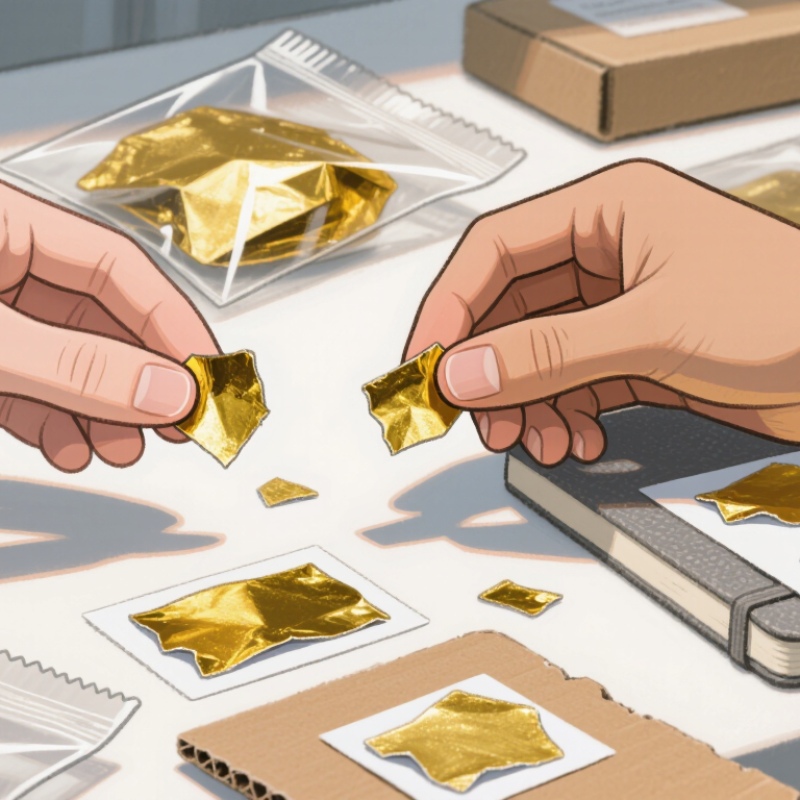
Gold foil sticker flakes are thin decorative pieces with a reflective metallic surface. They usually combine foil, adhesive, and a paper or film liner. The foil may be smooth, textured, or lightly distressed. These differences affect shine, flexibility, and handling. Do not confuse flakes with loose metallic leaf. Sticker flakes have a pressure-sensitive backing. They catch light beautifully.
In craft work, people use them on greeting cards, journals, gift boxes, and painted ceramics. Artists press individual pieces onto tacky surfaces with tweezers or a silicone tool. Packaging designers add small accents around logos, borders, or product names. Event planners may apply them to invitations and table cards. Their adhesive backing saves drying time. On glass, wood, and coated paper, adhesion can vary. I have found that clean, dry surfaces produce fewer lifted edges. Not every surface works.
When buying globally, ask for material details, flake dimensions, adhesive type, and storage guidance. Request a sample before ordering large quantities. Check whether the color remains stable after rubbing, folding, or brief moisture exposure. Packaging should protect the flakes from heat, dust, and crushing during transit. A clear product specification improves supplier comparisons. Color consistency matters, especially for repeat packaging orders. I once judged quality by shine alone. That assumption was weak. A duller finish may apply more evenly, while an extremely bright coating can scratch easily.
When buying gold foil sticker flakes globally, inspect the base material before admiring the shine. Check whether the flakes use paper, PET film, or another stable substrate. Hold a sample near a window and look for uneven thickness, cloudy areas, or curled edges. Ask for material specifications and recent quality reports. A beautiful surface means little if the flakes tear during application.
Compare the finish under daylight and warm indoor lighting. Metallic color can change noticeably between conditions. Rub a few flakes with a clean cotton cloth and watch for fading or loose coating. Test several sizes, not just the largest pieces. Small flakes suit detailed crafts, while larger flakes create stronger visual impact. Measure actual dimensions because catalog images can be misleading. My first sample looked generous online but arrived much smaller.
Adhesive performance needs practical testing. Apply flakes to glass, coated paper, plastic, and a textured surface. Press them firmly, then check after twenty-four and seventy-two hours. Look for lifting corners, bubbles, residue, or dull patches. Ask about application temperature and storage conditions. Humidity can weaken adhesion during international shipping. Request samples from different production batches when possible. One test is not enough. Record surface type, pressure, and waiting time, because rushed testing may hide problems. Packaging also matters; crushed flakes can distort size and finish before they reach your workshop.
7 Tips for Buying Gold Foil Sticker Flakes Globally
When buying gold foil sticker flakes globally, define the finish, flake size, adhesive type, and application surface. A sample kit reveals details that photos hide, especially shine, thickness, and edge consistency. Ask suppliers for material specifications, production photos, safety documents, and recent quality records. Verify the factory or trading company before requesting a large quotation. Small evidence matters.
Compare at least three suppliers using the same specification sheet. Prices may be quoted per bag, kilogram, roll, or carton. Convert every offer into a landed unit cost. Include packaging, inspection, bank fees, duties, and delivery charges. A low unit price can become expensive after freight. Request tiered prices for 100, 500, and 1,000 units, but avoid volume pressure. Minimum orders vary widely. Negotiate a trial order with clear replacement terms for damaged or inconsistent flakes.
Shipping terms deserve careful attention. Confirm whether the quote includes pickup, export handling, transport, insurance, and final delivery. Compare air, sea, and courier options by time and risk, not price alone. Ask for carton dimensions, gross weight, tracking details, and a realistic dispatch date. Delays happen. Build buffer time. I once underestimated holiday congestion and planned too tightly. That mistake made a cheaper supplier less practical. Record every promise in the purchase agreement, including color tolerance, moisture protection, inspection timing, and refund or remake procedures.
| Tip | Supplier Region to Compare | Typical Product Specification | Indicative Wholesale Price | Typical Minimum Order | Production Lead Time | Common Shipping Terms | Estimated Transit Time | Buyer Checkpoint |
|---|---|---|---|---|---|---|---|---|
| 1 | East Asia | Self-adhesive decorative sticker flakes; PET or coated paper base; metallic gold finish; mixed shapes; approximately 20–50 flakes per sheet. | US$0.08–0.30 per sheet | 500–2,000 sheets per design | 7–15 working days after artwork approval | FOB or EXW; courier, air freight, or consolidated sea freight | Air: 4–10 days Sea: 20–40 days |
Request a physical sample to verify adhesion, color consistency, flake size, and resistance to surface rubbing. |
| 2 | South Asia | Foil-finished paper sticker flakes with a clear protective coating; commonly supplied in themed packs or assorted decorative sets. | US$0.12–0.45 per pack | 300–1,000 packs per design | 10–25 working days | FCA, FOB, or DAP depending on order volume and destination | Air: 5–12 days Sea: 25–45 days |
Check whether the quoted price includes backing cards, transparent bags, header cards, and export cartons. |
| 3 | Southeast Asia | Gold foil sticker flakes produced on paper, vinyl, or transparent film; suitable for stationery, scrapbooking, gift packaging, and craft use. | US$0.10–0.38 per sheet | 1,000–5,000 sheets per artwork | 12–20 working days | FOB, CIF, or DDP for selected destinations | Air: 4–9 days Sea: 18–35 days |
Compare the total landed cost rather than the unit price alone, including packaging, duties, brokerage, and last-mile delivery. |
| 4 | Europe | Higher-finish decorative stickers with metallic foil or foil-look coating; often supplied with stronger paper stocks and stricter packaging controls. | US$0.25–0.90 per sheet | 250–1,000 sheets per design | 10–30 working days | EXW, FCA, or DAP; intra-regional road freight may be available | Road: 2–8 days Air: 3–7 days |
Confirm whether the metallic effect is genuine transferred foil or a printed imitation, as appearance and durability can differ. |
| 5 | North America | Small-batch and custom sticker flakes on paper or synthetic substrates; options may include custom die-cut shapes, gold effects, and retail-ready packaging. | US$0.30–1.20 per sheet | 100–500 sheets per design | 7–20 working days | EXW, FCA, or DAP; domestic parcel shipping for stocked items | Domestic: 1–7 days International: 5–14 days |
Useful for testing new designs with a lower MOQ, but compare setup charges and tooling fees before placing a small order. |
| 6 | Middle East and North Africa | Decorative gold-effect sticker flakes and embellishment packs for gift wrapping, event stationery, religious occasions, and craft applications. | US$0.15–0.60 per pack | 500–2,000 packs per style | 10–25 working days | FOB, CFR, or CIF; air freight is common for moderate quantities | Air: 5–14 days Sea: 20–45 days |
Ask for carton dimensions, gross weight, and harmonized tariff classification to estimate import costs accurately. |
| 7 | Latin America | Locally converted or imported sticker flakes in standard decorative formats; custom options may be available for regional retail and stationery markets. | US$0.20–0.85 per sheet | 250–1,500 sheets per design | 12–30 working days | EXW, FCA, DAP, or local domestic delivery | Domestic: 2–10 days International: 7–20 days |
Evaluate local availability against import savings, especially when duties, customs clearance, and long replenishment cycles affect inventory costs. |
Price reference: The ranges above are indicative wholesale benchmarks in U.S. dollars for standard, unlicensed gold foil sticker flakes and exclude artwork, tooling, taxes, import duties, and freight unless stated otherwise. Final pricing depends on material, size, finish, packaging, order quantity, destination, and payment terms.
7 Tips for Buying Gold Foil Sticker Flakes Globally
Tip 1: Request a sealed product sample before discussing large quantities. Check the flakes under daylight and warm indoor light. Compare color, shine, thickness, and particle size. Press them onto paper, plastic, or your intended surface. Test adhesion after 24 hours. A photograph cannot reveal weak glue or uneven coating.
Tip 2: Ask for current certifications and verify them with the issuing organization. Documents should match the seller’s legal company name, product description, and production location. Review material declarations, safety data, and applicable packaging or labeling requirements. Requirements differ between countries. Do not accept a certificate with missing dates or unclear testing methods.
Tip 3: Inspect packaging details carefully. Moisture-resistant inner bags, sealed cartons, batch numbers, and readable labels reduce shipping risks. Ask how the seller protects flakes from heat, crushing, and contamination. I once underestimated humidity during transport. That mistake made the flakes clump slightly. It was avoidable, but not obvious from the sample.
Tip 4: Judge reliability through consistent communication. A dependable seller explains lead times, minimum order quantities, sampling costs, and replacement policies in writing. Request recent inspection photos, but treat photos as supporting evidence only. Confirm the business address and payment details independently. Ask the same technical question twice. Contradictory answers deserve caution. No checklist is perfect. Allow room for careful doubt.
Buying gold foil sticker flakes internationally requires more than comparing prices. Confirm whether “gold” means metallic color, plated foil, or another composition. Ask for a material specification, adhesive details, batch information, and a small sample. Photos can hide uneven flakes or weak adhesion. Inspect the sample under bright light before placing a larger order.
Request a commercial invoice with accurate descriptions, quantities, value, and country of origin. Check the correct customs classification with your local authority or a licensed customs professional. Estimate duties, taxes, brokerage fees, and delivery charges before payment. Do not rely on vague shipping promises. Written terms matter. I once underestimated landed costs on a small decorative shipment; the mistake was avoidable. Choose tracked transport and protective inner bags. Moisture can cause clumping, while loose flakes may scatter through damaged packaging.
Store the flakes in sealed containers, away from sunlight, heat, and humidity. Keep them off the floor and label each batch with its arrival date. During handling, use clean tools, a stable work surface, and suitable eye protection. Avoid breathing dust or using the flakes near food, children, or open flames unless the supplier confirms safe intended use. Check local labeling, chemical, waste, and consumer-product requirements, since rules differ by destination. Keep invoices, test records, and correspondence together. Even a careful checklist can miss a local requirement, so pause and verify before dispatch.
Annual average gold prices provide a useful benchmark when planning international purchases of gold foil sticker flakes. The final landed cost may also include product conversion, packaging, freight, insurance, customs duties, taxes, and storage.
Source: World Gold Council, annual average gold price data; values shown in U.S. dollars per troy ounce. Storage and customs costs are not included.
They are small decorative pieces with a reflective metallic surface. They include foil, adhesive, and a paper or film liner. They are not loose metallic leaf. The backing makes application faster.
Use them on greeting cards, journals, gift boxes, and coated ceramics. They can accent borders, invitations, table cards, and package designs. Clean, dry surfaces usually work better. Not every surface works.
Place each flake with tweezers or a silicone tool. Press it firmly onto a tacky, clean surface. Avoid touching the adhesive with dusty fingers. Small details need patience.
Ask whether the base uses paper, PET film, or another stable material. Request flake dimensions, adhesive type, finish, and storage instructions. Check recent quality information when available. Shine alone proves little.
View samples beside a window and under warm indoor lighting. Look for cloudy patches, uneven thickness, curls, or damaged edges. Rub several pieces with a clean cotton cloth. Watch for fading or loose coating.
Apply samples to glass, coated paper, plastic, and textured material. Press them firmly and inspect after twenty-four and seventy-two hours. Check for lifted corners, bubbles, residue, or dull areas. Record the surface and waiting time.
Request a sample before ordering a large quantity. Confirm material composition, batch information, dimensions, and color consistency. Ask for accurate invoices, quantities, value, and origin details. Shipping costs can surprise you.
Keep them in sealed containers away from sunlight, heat, and humidity. Store containers off the floor and label each batch by arrival date. Use clean tools and a stable work surface. Avoid breathing dust or using them near food and open flames.
Buying Gold Foil Sticker Flakes globally requires careful evaluation of both product quality and supplier reliability. First, understand how the flakes will be used, such as for crafts, packaging, decoration, or creative surface effects. Compare the material, color consistency, metallic finish, flake size, and adhesive performance to ensure the product suits your application. Request samples before placing a large order, and check whether the supplier can provide relevant quality documents, clear product specifications, protective packaging, and consistent communication.
International purchasing also involves comparing prices, minimum order quantities, production times, shipping methods, and payment terms from different suppliers. Make sure customs requirements, import fees, storage conditions, and handling instructions are understood in advance. Gold Foil Sticker Flakes should be kept dry, clean, and protected from excessive heat or pressure during storage and transportation. By reviewing samples, confirming packaging details, checking seller credibility, and planning logistics carefully, buyers can reduce risks and make more confident purchasing decisions.