
Engineered for high-volume commercial packaging, custom crafts, office verification, and specialty surface sealing. Sourcing directly from verified OEM/ODM production lines.
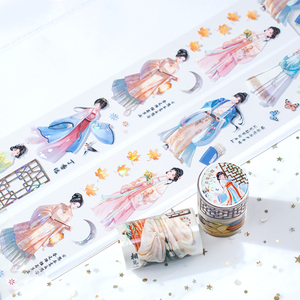
Ultra-clear polyester film with high-definition digital print layers. Tear-resistant adhesive matrix engineered for seamless journal layouts and clear stamp border framing.
Get a Quote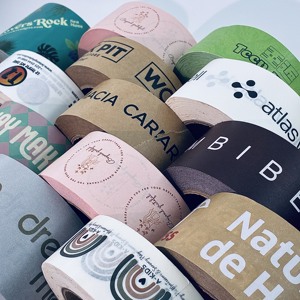
Heavy-duty eco-friendly reinforced kraft sealing tape. Optimized for custom ink-stamp compatibility, high shear strength, and tamper-evident cardboard box packaging.
Get a Quote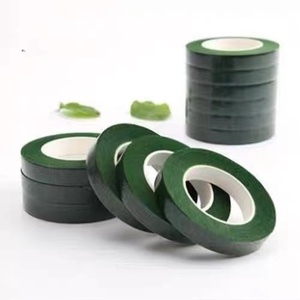
Self-sealing wax-coated stretch tape tailored for floral arrangements and crafting stem wraps. Excellent moisture-resistance and flexible tensile hold under high humidity.
Get a Quote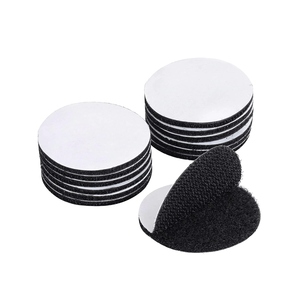
Precision die-cut clear acrylic mounting dots. Leaves zero residue on smooth glass, plastic, or acrylic stamp blocks. Ideal for temporary industrial mounting and displays.
Get a Quote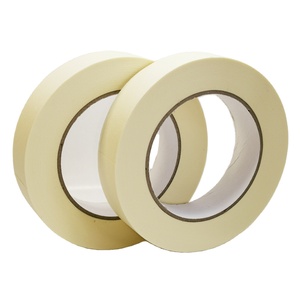
Industrial-grade crepe paper backing for clean fine-line paint masking and vulcanized stamp mold masking. Withstands high temperature baking without residue bleed.
Get a Quote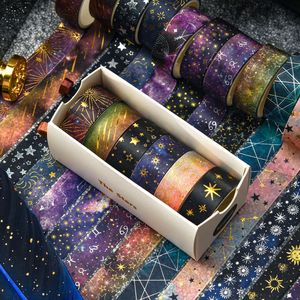
Premium metallic foil hot-stamped paper trim. Combines intricate relief texturing with aggressive pressure-sensitive adhesive for luxury branding and bookbinding.
Get a Quote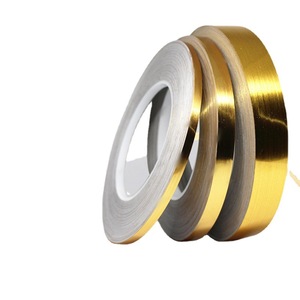
Wear-resistant metallic film border strips designed for interior trim seal, tile gap sealing, and structural surface framing. Moisture-proof with persistent tack polymer layer.
Get a Quote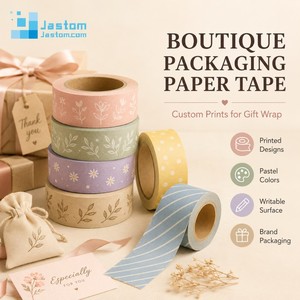
Boutique packaging kraft tape supporting both custom factory flexo printing and hand-stamped ink impressions. Matte non-coated top layer guarantees zero ink smudging.
Get a QuoteAn exhaustive technical evaluation of elastomer compounding, vulcanization techniques, photopolymer photolithography, and supply chain quality control for commercial procurement directors.
The performance of any commercial or decorative rubber stamp relies fundamentally on the polymer compound's Shore A Durometer rating. Modern industrial rubber stamp manufacturing utilizes specialized natural rubber (NR) vulcanizates or synthetic Ethylene Propylene Diene Monomer (EPDM) matrices to achieve balanced elasticity and solvent resistance.
For high-resolution graphic stamps, a hardness range of 45 to 55 Shore A is maintained. Hardness levels below 40 Shore A risk image distortion under pressing force, while compounds exceeding 65 Shore A struggle to yield uniform ink transfer across textured substrates such as recycled corrugated boxes or handmade felt paper.
Procurement managers must weigh the unit economics between Direct Laser Engraving (DLE) and traditional matrix mold heat vulcanization. DLE employs high-power CO2 or fiber laser beams (10.6 µm wavelength) to directly ablate unvulcanized rubber sheets at resolutions reaching up to 1200 DPI.
Laser ablation enables zero-tooling micro-MOQ manufacturing, ideal for personalized office stamps, address seals, and localized branding. Conversely, thermo-compression matrix molding requires brass or resin master plates, delivering low unit costs once batch volume surpasses 5,000 units.
While vulcanized rubber remains the benchmark for industrial longevity and oil-based ink resistance, photopolymer clear stamps have captured a substantial share of the scrapbooking, craft, and fast-turnaround commercial packaging markets. Liquid resin photopolymers undergo UV cross-linking under controlled optical masks. This process forms a transparent stamp body that allows operators to align ink application visually.
However, enterprise buyers must account for chemical compatibility: photopolymer stamps degrade when exposed to aggressive solvent-based or fast-drying alcohol inks. Vulcanized natural rubber, treated with antioxidant and antiozonant additives (such as 6PPD), maintains dimensional stability over decades even under heavy industrial solvent exposure.
| Material / Manufacturing Tech | Shore Hardness | Ink Compatibility | Typical Tooling Cost | Ideal Procurement Volume | Life Expectancy (Impressions) |
|---|---|---|---|---|---|
| Vulcanized Natural Rubber (Molded) | 45 - 55 Shore A | Water, Oil, Solvent & Alcohol Inks | High (Master Matrix Required) | 5,000 - 500,000+ units | > 500,000 |
| Direct Laser Engraved Rubber (DLE) | 50 - 60 Shore A | Universal Ink Compatibility | Zero Tooling Cost | 1 - 1,000 units (Custom/On-Demand) | > 300,000 |
| Liquid Photopolymer Resin | 35 - 45 Shore A | Water-Based & Pigment Gel Inks | Low (Film Positive Mask) | 100 - 5,000 units | 50,000 - 100,000 |
| Micro-Porous Flash Foam (Self-Inking) | 25 - 35 Shore A | Oil-Based Pre-Inked Formulations | Low (Thermal Flash Exposure) | 10 - 2,000 units | 20,000 - 50,000 |
Key technological transformations driving supply chain restructuring, eco-compliance mandates, and smart manufacturing integration in the international stamp industry.
Regulatory bodies including REACH (EU) and TSCA (USA) are expanding restrictions on phthalate plasticizers and volatile organic compounds (VOCs). Top rubber stamp factories are transitioning to soy-based polyols and recycled synthetic elastomers, reducing carbon footprint per batch by up to 34%.
Modern boutique packaging combines digital variable-data inkjet printing with hand-applied accent stamps or custom printed pressure-sensitive paper tapes. This hybrid approach enables brands to maintain rapid unboxing personalization without committing to fully custom printed cardboard runs.
Direct-to-factory EDI API integrations allow enterprise e-commerce platforms to automatically push personalized customer stamp orders into robotic laser engraving cells. Orders are etched, mounted onto FSC-certified wooden handles, and shipped within 24 hours of checkout.
Navigating offshore manufacturing requires rigorous verification. Reliable stamp suppliers do not simply ship products; they provide complete technical transparency from polymer testing to final packaging assembly.
Essential technical, logistical, and commercial answers for sourcing managers, wholesalers, and stationery brand owners.
To eliminate unwanted ink transfer from non-image areas (commonly called haloing), the standard relief depth for vulcanized rubber and clear photopolymer stamps is set between 1.1 mm and 1.5 mm. For softer substrates or high-pressure automated stamping machinery, relief depth is extended up to 2.0 mm combined with a 60-degree shoulder bevel on fine line art.
Because Direct Laser Engraving (DLE) operates digitally without physical tooling, MOQs can be as low as 50 to 100 units per artwork SKU. Heat-compression matrix vulcanization requires upfront brass or phenolic matrix master production, typically establishing a baseline MOQ of 1,000 to 3,000 units per design to amortize setup costs efficiently.
Natural rubber stamps tolerate water-based pigment inks, dye-based inks, oil-based quick-drying inks, and solvent/alcohol-based industrial marking inks. Photopolymer clear stamps are formulated primarily for water-based dye and chalk pigment inks; exposure to fast-drying solvent inks (such as ethyl acetate or methyl ethyl ketone matrices) will cause swelling, cracking, and loss of detail.
Factory quality control labs perform standard FINAT testing procedures: 180-degree peel adhesion testing (FTM 1), loop tack measurement (FTM 9), and dynamic shear resistance (FTM 8). Rubber cushion mounts undergo repeated compression cycling (100,000 cycles at 15 PSI) to confirm zero delamination between the rubber matrix, acrylic cling layer, and foam backing.
Full OEM/ODM capabilities encompass custom molded wooden handles, logo laser-etching, custom printed index labels, and retail packaging formats including printed kraft boxes, foil-stamped sleeves, PET blister packs, and hang-tag cards. All packaging materials are compliant with international barcode, REACH, and recycling symbol directives.
Digital vector prototype sampling typically requires 3 to 5 business days. Once physical pre-production samples are approved, bulk production lead time spans 15 to 25 calendar days depending on total unit volume and packaging complexity. International sea freight transit adds 14 to 35 days based on destination port location.
Connect directly with our engineering team for technical CAD reviews, custom material compounding, wholesale price matrices, and rapid turn-around sample requests.
Get a Quote